
Havan
Lakshmi Havan
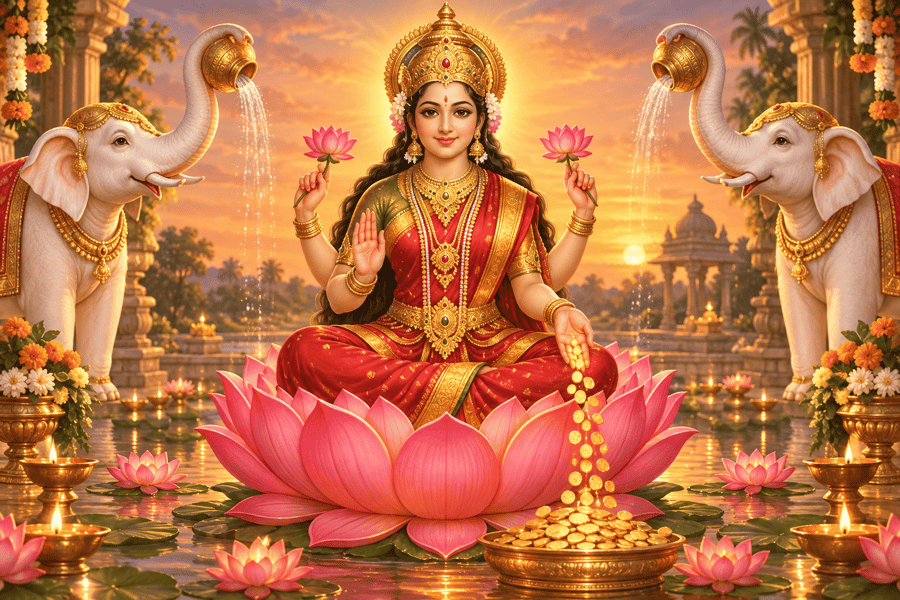
Calls on Lakshmi, goddess of wealth and plenty, with prayers for financial growth, stability and a prosperous, happy home.
Read more ↗Goddess Lakshmi
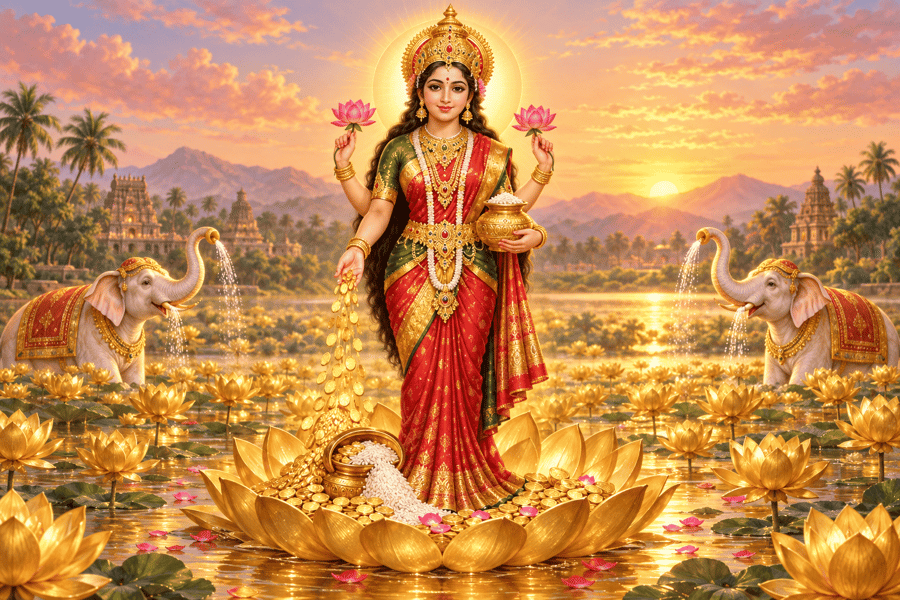
Centred on the Sri Suktam, among the oldest Vedic hymns to Lakshmi, this havan seeks prosperity that comes with grace and good character.
01 · The ritual
Centred on the Sri Suktam, among the oldest Vedic hymns to Lakshmi, this havan seeks prosperity that comes with grace and good character.
During a havan, the priest pours ghee, grain and sacred herbs into a consecrated fire as each mantra is chanted. Tradition holds that Agni, the fire, bears every offering and every prayer to the divine. Havans reach back to Vedic times, and they remain among the oldest and most joyful forms of worship in India.
02 · The deity
The Sri Suktam is a hymn to Lakshmi as Sri — radiant, gracious abundance. It asks not just for wealth, but for prosperity that brings good character and a good name.
The Sri Suktam is one of the oldest hymns to Lakshmi, preserved as an appendix (khila) to the Rig Veda. For centuries priests have used its verses for havans on Fridays, full moons and Diwali, offering lotus, bilva and ghee with each verse.
03 · Blessings
Generations of families have offered the Sri Suktam Havan. Tradition links it with these blessings:
Every ritual is an offering of faith, hope and thanks. We describe its blessings in tradition's own words, and Aum Fe never promises any particular result.
04 · For you?
Families wanting long-term prosperity, and those who prefer a Vedic, traditional havan.
Everyone is welcome, and there are no mantras or rituals to learn first. Join for yourself, or hold someone dear in prayer: a child facing exams, parents in another city, a friend making a fresh start.
05 · Timing
Fridays, Purnima, Diwali.
06 · Together
Every Aum Fe havan is open and shared: a single sacred fire, a single chain of mantras, and devotees taking part from homes in India and across the globe. Hindu tradition has always held collective prayer especially dear. The closing hymn of the Rig Veda urges “sam gacchadhvam, sam vadadhvam” — move together, speak together, let your minds be in harmony.
According to the Bhagavata Purana, chanting the divine name is the simplest and most powerful path in this age, and the first of the nine forms of bhakti it names is shravanam, listening with devotion. So as you sit quietly with the mantras of this havan, you are no onlooker. You are part of it, together with everyone else who has joined.
Each person who joins adds a prayer to the one fire. That is what Aum Fe is about: countless hopes, one havan, blessings shared by all.
07 · At the altar
The havan takes place at a quiet Himalayan temple, led by the temple's own pujari, a priest of long experience, at a properly prepared altar — the right mantras, in the right order, with complete devotion. Our crew makes the journey to film it for you. It is never hurried and never shortened.
Lotus, bilva, ghee, kheer.
Your booking also helps these mountain pujaris, their families and their villages through harsh Himalayan winters, and keeps alive the sacred traditions they have spent years mastering.
08 · Value
Holding a havan at home by yourself takes real effort: dakshina for the pandit, havan samagri and sacred wood to buy, a suitable space to find and prepare, and a day off to organise it all. Since each Aum Fe havan is shared among many devotees, so are those costs.
The priests, samagri, altar and havan video are all covered. You just join and pray.
09 · From anywhere
Devotion does not depend on distance. From anywhere in India or overseas, you can be part of the havan.
A small diya or lamp · A stick of incense · One fresh flower · A glass of water · A little sweet to offer.
10 · Prasad
Once the havan is complete, blessed prasad and sacred items — a sacred thread, kumkum or vibhuti, where the ritual uses them — are carefully packed and sent by courier. We ship across India and internationally as well, so families abroad can receive the blessing at home.
11 · Good to know
Many families hold off on new rituals while the family is in mourning (sutak) and during solar or lunar eclipse hours. Some traditions also avoid rituals of new beginnings in Pitru Paksha and Kharmas. Not sure? Ask us, and we will help you pick a good date.
Plans changed? Cancel at least 24 hours before the scheduled start and you receive a full refund — see our refund policy.
Ek agni, sabki prarthana.
Open havans from ₹111. Pray as one, receive the video, and have prasad couriered to you.
Join this havan ↗Explore more havans & pujasYou might also like
Calls on Lakshmi, goddess of wealth and plenty, with prayers for financial growth, stability and a prosperous, happy home.
Read more ↗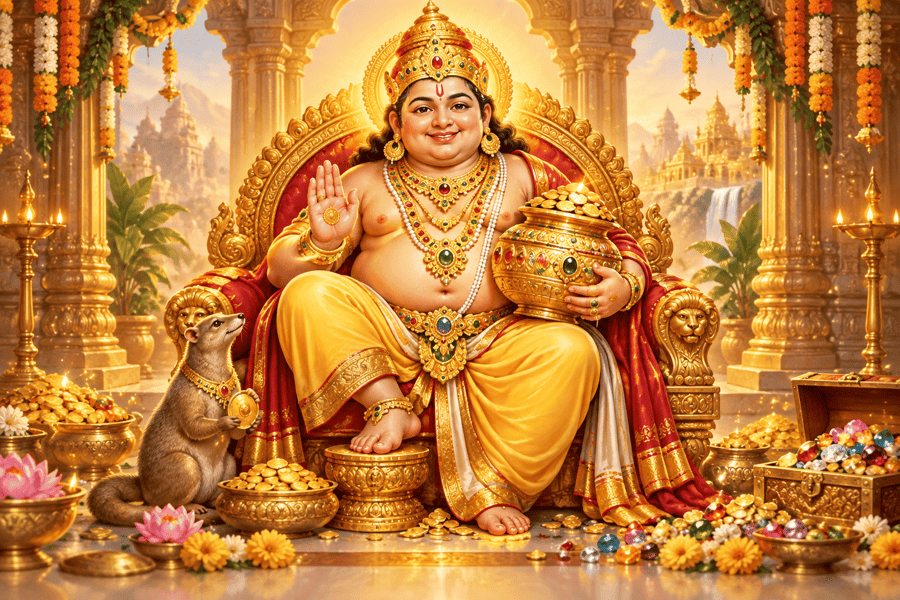
Kubera keeps the treasury of the gods. Devotees offer this havan for growing savings, protecting wealth and lasting financial security, not windfalls.
Read more ↗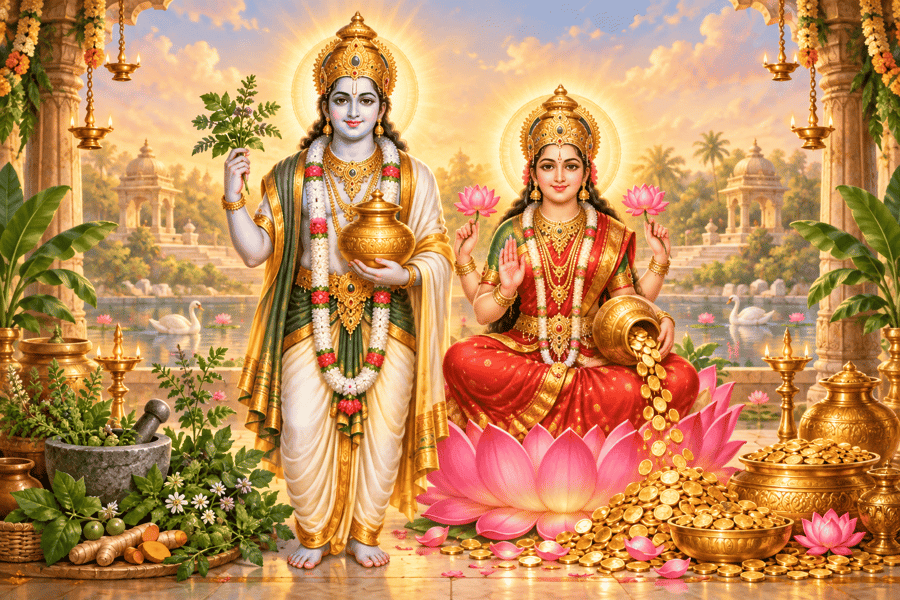
A Dhanteras havan that brings health and wealth together, in the belief that prosperity is incomplete without wellbeing.
Read more ↗