
Puja
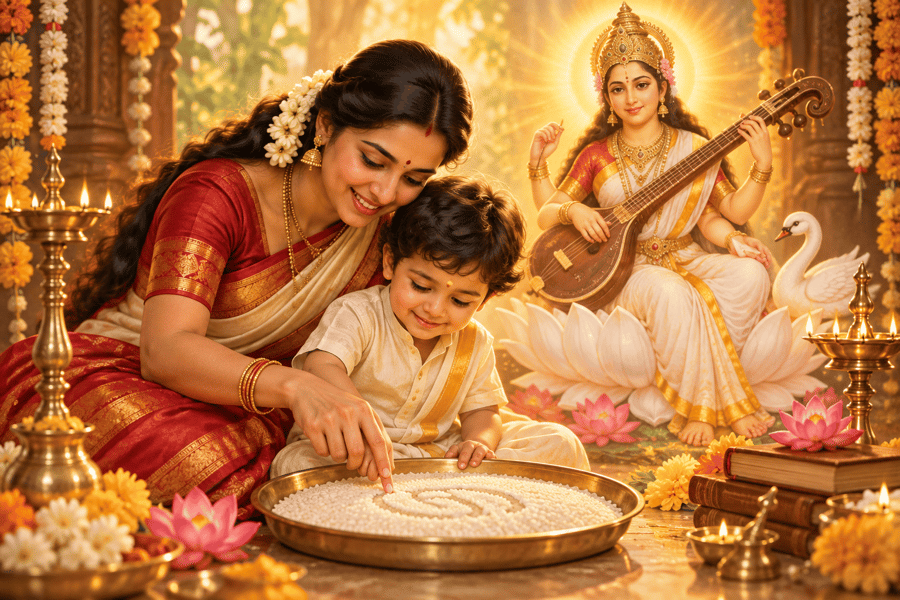
Vidyarambham (Aksharabhyasam)
A child's first letters — written in rice with a guiding hand — to begin their education under the goddess's blessing.
Read more ↗Lord Ganesha, Lord Vishnu & Goddess Lakshmi
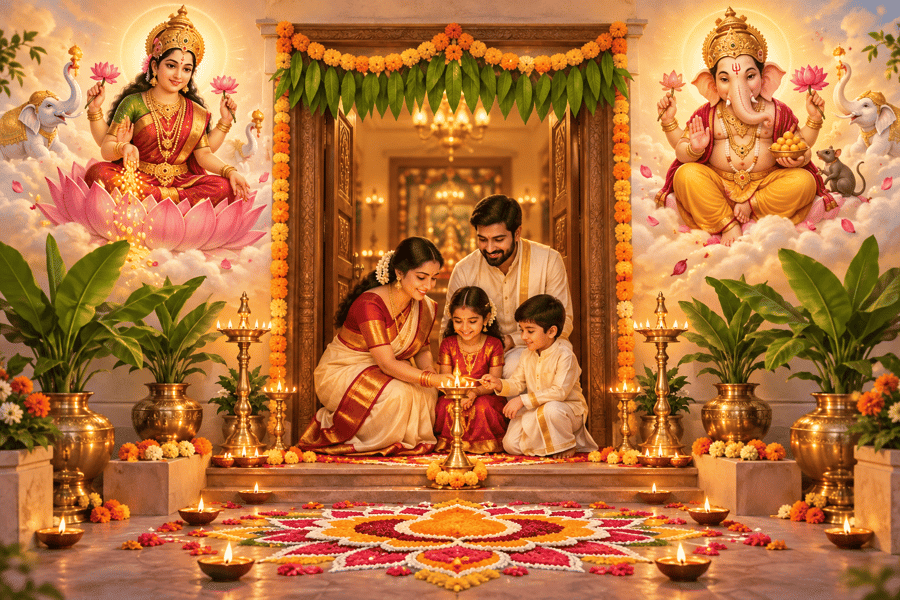
The housewarming havan. Sanctifies a new home before the family moves in and invites Lakshmi to reside there.
01 · The ritual
The housewarming havan. Sanctifies a new home before the family moves in and invites Lakshmi to reside there.
In a havan, the priest offers ghee, grains and sacred herbs into the consecrated fire with every mantra. In tradition, Agni — the fire — carries each offering and prayer to the divine. It is one of the oldest and most joyful ways to pray, and it has been performed in India since Vedic times.
02 · The deity
A new home is welcomed with Ganesha to clear the way, Vishnu to protect it, and Lakshmi to fill it with abundance — so the family’s first steps inside are blessed.
Griha Pravesh is one of the most cherished family ceremonies in India. Traditions such as boiling milk until it overflows — a sign of plenty that never runs out — and entering with the right foot first have been passed from generation to generation.
03 · Blessings
Families have turned to the Griha Pravesh Havan for generations. These are the blessings traditionally sought from it:
A ritual is an act of faith, hope and gratitude. We describe blessings the way tradition describes them; Aum Fe never promises a particular outcome.
04 · For you?
Families moving into a newly built or bought home, and tenants entering a new house.
Anyone can join — you do not need to know any mantras or rituals. Join for yourself, or pray for someone you love: a child before exams, parents far away, a friend starting something new.
05 · Timing
An auspicious muhurat; popular months are Magh, Phalgun, Vaishakh and Jyeshtha.
06 · Together
A Aum Fe havan is an open, shared havan. One sacred fire, one set of mantras, and devotees joining from homes across India and around the world. In Hindu tradition, praying together has always been held especially dear: the very last hymn of the Rig Veda calls on people to “sam gacchadhvam, sam vadadhvam” — come together, speak together, let your minds be in harmony.
The Bhagavata Purana teaches that in this age, the chanting of the divine name is the simplest and most powerful path — and it lists shravanam, listening with devotion, as the very first of the nine forms of bhakti. So when you sit quietly and hear the mantras of this havan, you are not a spectator. You are taking part, alongside everyone else who has joined.
Every person who joins adds their prayer to the same fire. That is the heart of Aum Fe: many hopes, one havan, blessings for all.
07 · At the altar
Your havan is performed at a peaceful Himalayan temple by its own pujari, a priest with years of experience, at a properly prepared altar — with the correct mantras, the correct sequence and full devotion. Our crew travels there to film it for you. Never rushed, never cut short.
Kalash, coconut, milk (boiled to overflow), rice, ghee, fresh flowers.
When you join, you also support these mountain pujaris, their families and their villages through the hard Himalayan winters — so the sacred traditions they have spent years learning are kept alive.
08 · Value
Arranging a havan at home on your own is a big undertaking: the pandit’s dakshina, buying the havan samagri and sacred wood, finding and preparing a proper place, and taking the day off to organise it all. Because a Aum Fe havan is shared by many devotees, those costs are shared too.
Priests, samagri, altar and the video of the havan — all included. You simply join and pray.
09 · From anywhere
Distance is no barrier to devotion. Wherever you are — in India or abroad — you can be part of the havan.
A small lamp or diya · An incense stick · A fresh flower · A glass of water · A small sweet to offer.
10 · Prasad
After the havan, blessed prasad and sacred items — such as a sacred thread, kumkum or vibhuti, where the ritual uses them — are packed with care and sent by courier. We deliver across India, and internationally too, so families living abroad can receive the blessing at home.
11 · Good to know
Many families avoid new rituals during a period of mourning (sutak) in the family, and during solar or lunar eclipse hours. Some traditions also avoid new-beginning rituals during Pitru Paksha and Kharmas. If you are unsure, ask us — we will help you choose a good date.
Changed plans? You get a full refund if you cancel at least 24 hours before the scheduled start — see our refund policy.
Sab ki aahuti, sab ka ashirwad.
Open havans starting from ₹111. Pray together, receive the video, and get prasad by courier.
Join this havan ↗Explore more havans & pujasYou may also love
A child's first letters — written in rice with a guiding hand — to begin their education under the goddess's blessing.
Read more ↗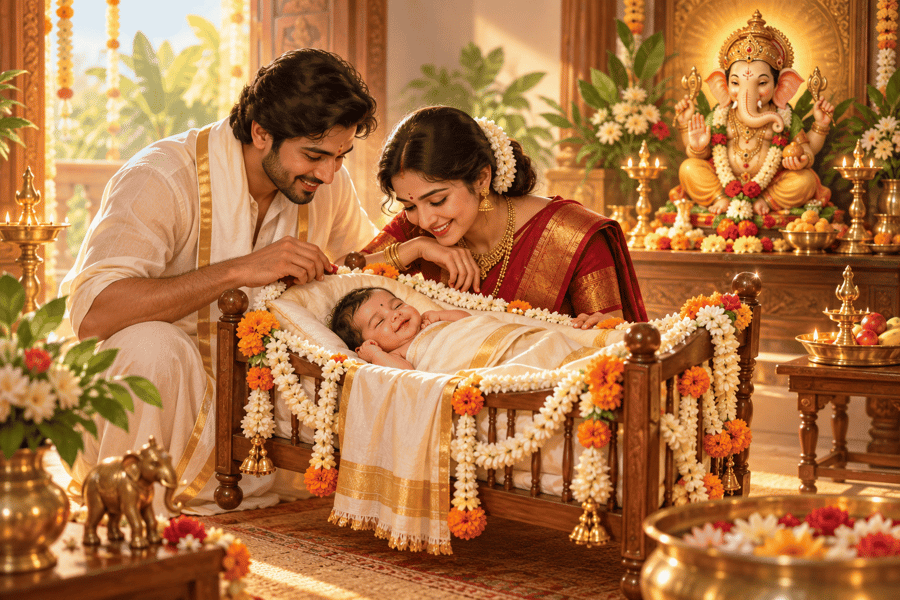
The naming ceremony — the baby's name is chosen, often by birth star, and whispered into their ear amid blessings.
Read more ↗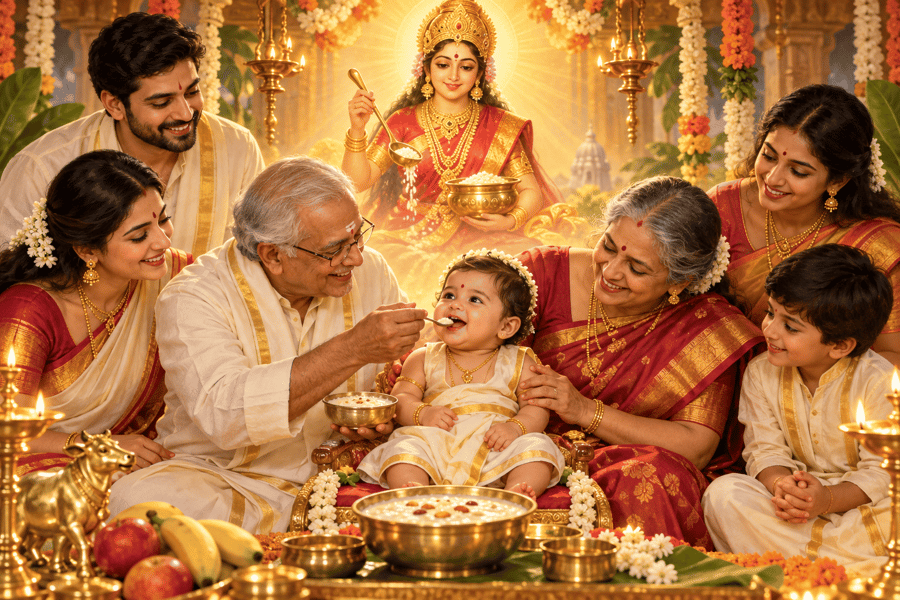
The baby's first taste of solid food — usually sweet rice — offered with prayers for nourishment and health.
Read more ↗