
Havan
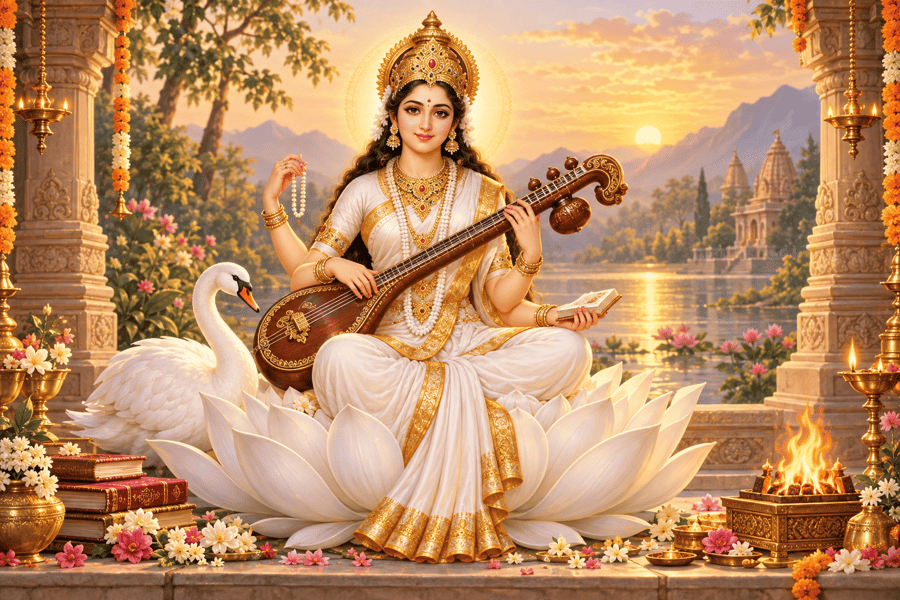
Saraswati Havan
A fire ritual invoking the goddess of knowledge, music and speech. Performed before exams, admissions, creative projects or when a child begins formal learning.
Read more ↗Brihaspati (Jupiter)
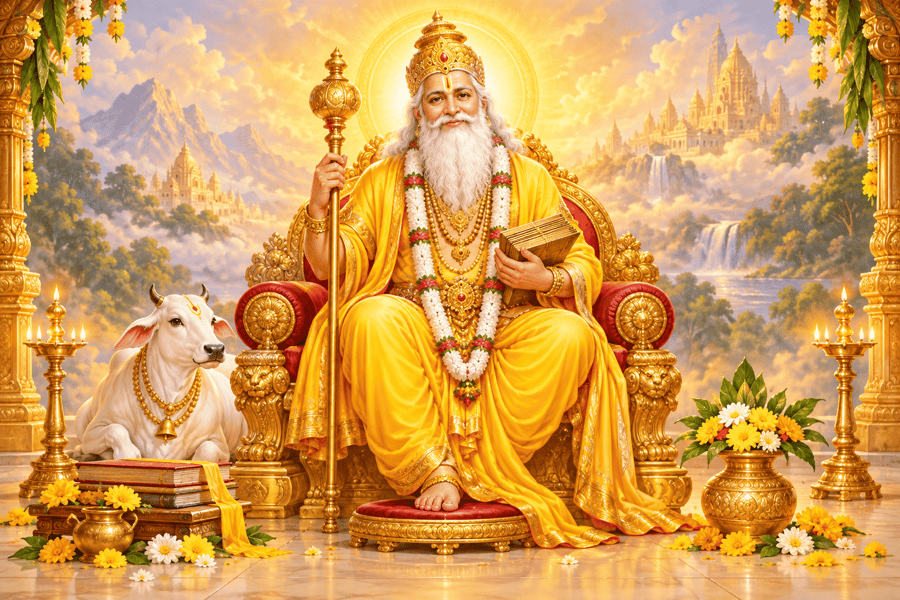
A havan to Brihaspati, the guru of the devas — honoured for wisdom, higher learning, children and good fortune.
01 · The ritual
A havan to Brihaspati, the guru of the devas — honoured for wisdom, higher learning, children and good fortune.
In a havan, the priest offers ghee, grains and sacred herbs into the consecrated fire with every mantra. In tradition, Agni — the fire — carries each offering and prayer to the divine. It is one of the oldest and most joyful ways to pray, and it has been performed in India since Vedic times.
02 · The deity
Brihaspati is the guru of the devas, linked with the planet Jupiter — the giver of wisdom, good counsel, children and fortune. Thursday (Guruvar) is named after him.
In the Vedas, Brihaspati is the priest and teacher of the gods, the lord of sacred speech and prayer. As the planet Jupiter he is considered the most benevolent of all the planets, and a havan to him is a traditional way to invite his kindly influence.
03 · Blessings
Families have turned to the Brihaspati (Guru Graha) Havan for generations. These are the blessings traditionally sought from it:
A ritual is an act of faith, hope and gratitude. We describe blessings the way tradition describes them; Aum Fe never promises a particular outcome.
04 · For you?
Students of law, philosophy or finance, teachers, and people seeking wisdom and direction in life.
Anyone can join — you do not need to know any mantras or rituals. Join for yourself, or pray for someone you love: a child before exams, parents far away, a friend starting something new.
05 · Timing
Thursdays and Guru Purnima.
06 · Together
A Aum Fe havan is an open, shared havan. One sacred fire, one set of mantras, and devotees joining from homes across India and around the world. In Hindu tradition, praying together has always been held especially dear: the very last hymn of the Rig Veda calls on people to “sam gacchadhvam, sam vadadhvam” — come together, speak together, let your minds be in harmony.
The Bhagavata Purana teaches that in this age, the chanting of the divine name is the simplest and most powerful path — and it lists shravanam, listening with devotion, as the very first of the nine forms of bhakti. So when you sit quietly and hear the mantras of this havan, you are not a spectator. You are taking part, alongside everyone else who has joined.
Every person who joins adds their prayer to the same fire. That is the heart of Aum Fe: many hopes, one havan, blessings for all.
07 · At the altar
Your havan is performed at a peaceful Himalayan temple by its own pujari, a priest with years of experience, at a properly prepared altar — with the correct mantras, the correct sequence and full devotion. Our crew travels there to film it for you. Never rushed, never cut short.
Yellow flowers, chana dal, turmeric, ghee, yellow cloth, peepal samidha.
When you join, you also support these mountain pujaris, their families and their villages through the hard Himalayan winters — so the sacred traditions they have spent years learning are kept alive.
08 · Value
Arranging a havan at home on your own is a big undertaking: the pandit’s dakshina, buying the havan samagri and sacred wood, finding and preparing a proper place, and taking the day off to organise it all. Because a Aum Fe havan is shared by many devotees, those costs are shared too.
Priests, samagri, altar and the video of the havan — all included. You simply join and pray.
09 · From anywhere
Distance is no barrier to devotion. Wherever you are — in India or abroad — you can be part of the havan.
A small lamp or diya · An incense stick · A fresh flower · A glass of water · A small sweet to offer.
10 · Prasad
After the havan, blessed prasad and sacred items — such as a sacred thread, kumkum or vibhuti, where the ritual uses them — are packed with care and sent by courier. We deliver across India, and internationally too, so families living abroad can receive the blessing at home.
11 · Good to know
Many families avoid new rituals during a period of mourning (sutak) in the family, and during solar or lunar eclipse hours. Some traditions also avoid new-beginning rituals during Pitru Paksha and Kharmas. If you are unsure, ask us — we will help you choose a good date.
Changed plans? You get a full refund if you cancel at least 24 hours before the scheduled start — see our refund policy.
Sab ki aahuti, sab ka ashirwad.
Open havans starting from ₹111. Pray together, receive the video, and get prasad by courier.
Join this havan ↗Explore more havans & pujasYou may also love
A fire ritual invoking the goddess of knowledge, music and speech. Performed before exams, admissions, creative projects or when a child begins formal learning.
Read more ↗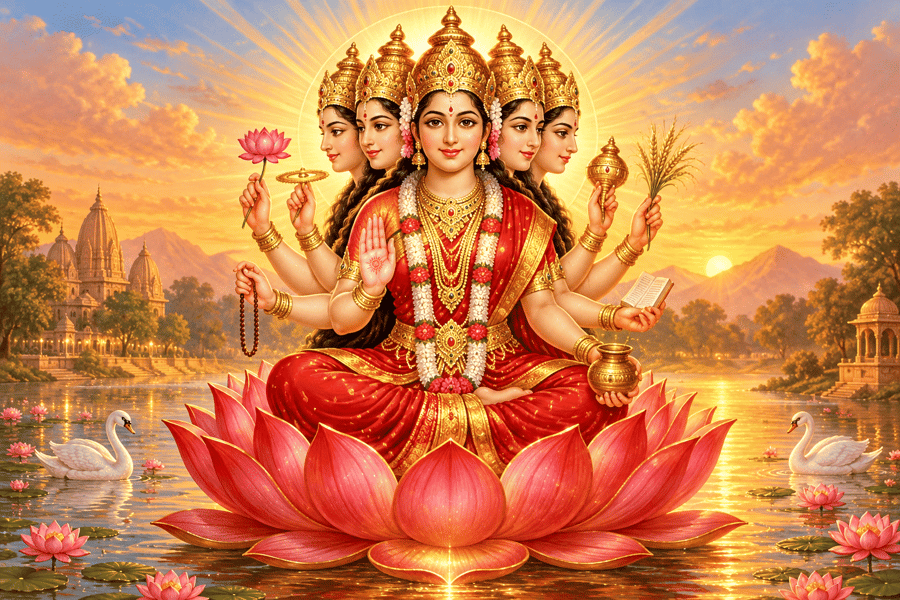
Offerings made with the Gayatri mantra, the most revered Vedic prayer for illumination of the intellect. A gentle, all-purpose havan for clarity and inner light.
Read more ↗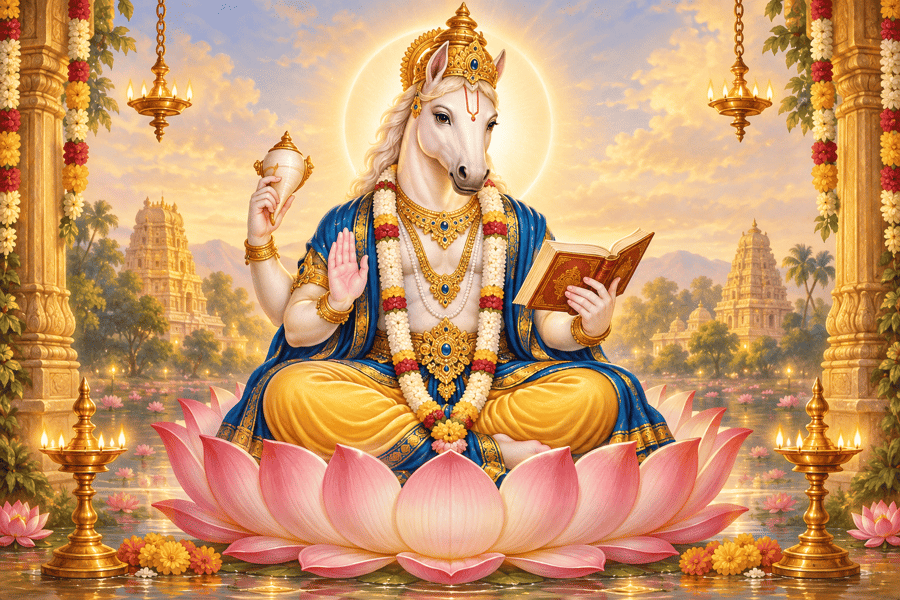
Vishnu's horse-headed form is the keeper of all knowledge and the patron of scholars. This havan is sought for higher studies, research and competitive exams.
Read more ↗